Varicose Veins/Venous Insufficiency
1 in 3 Adults may be affected by Venous disorders
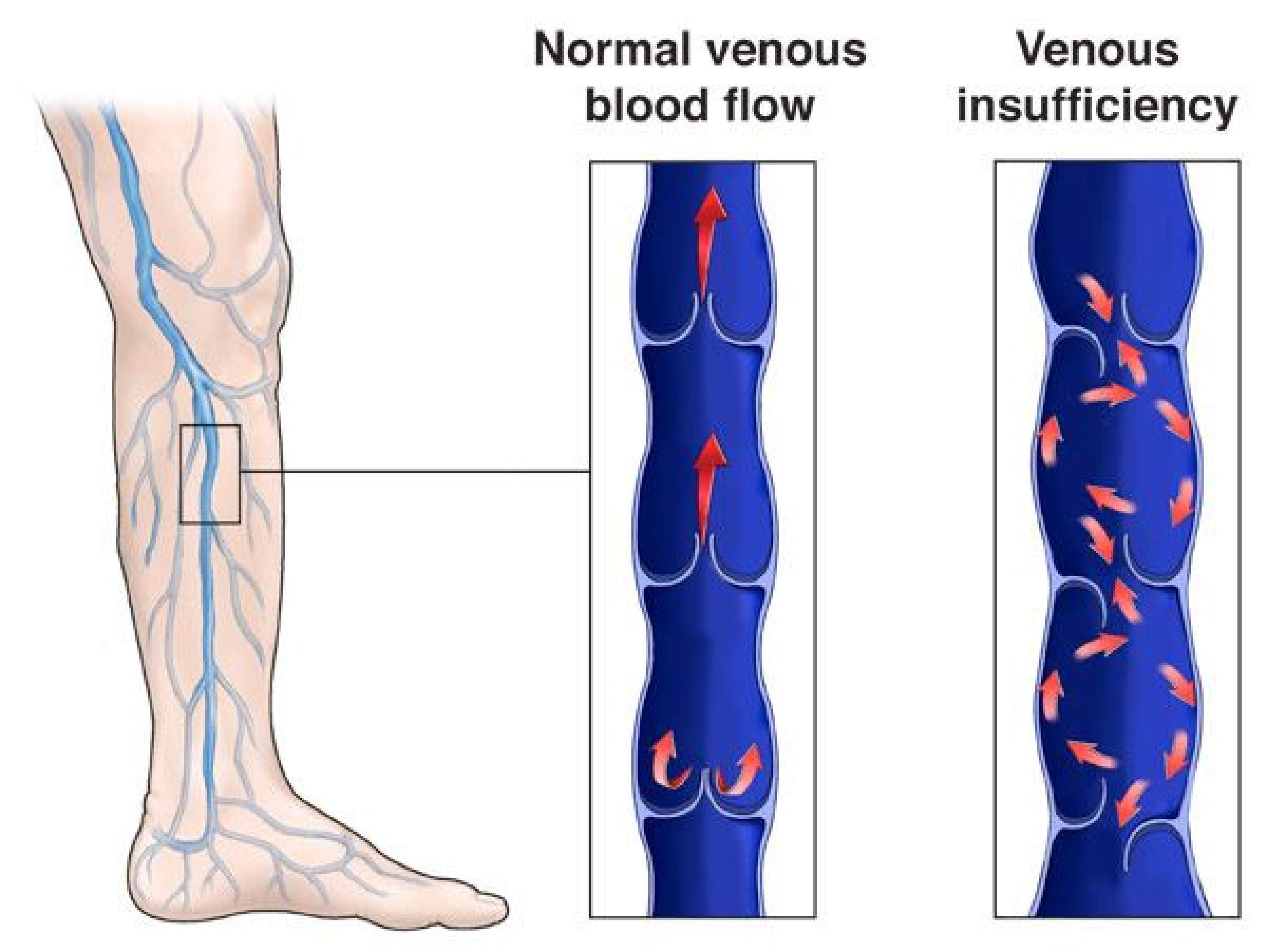
Chronic Venous Insufficiency (CVI) is a blood vessel disease that most commonly affects the veins in the legs. The veins in your legs are responsible for carrying blood back toward your heart. However, aging and certain risk factors can cause damage or weakening of the vein walls and valves. Normally, the valves inside your veins open to allow blood to flow upward toward the heart and close to prevent blood from flowing backward. When these valves become damaged or weakened, blood can flow backward and pool in the veins of the legs. This condition is known as venous reflux and can lead to increased pressure within the veins, resulting in swelling, discomfort, skin changes, and potentially non-healing wounds.
Venous insufficiency is a significant healthcare issue that can lead to symptoms and complications such as leg swelling, pain, aching, heaviness, varicose veins, skin discoloration, venous stasis dermatitis, infection, and non-healing venous ulcers. If left untreated, chronic venous hypertension can cause progressive skin damage and ulceration, significantly impacting a patient's quality of life and mobility. Venous insufficiency is common but frequently underdiagnosed, as many patients attribute symptoms such as leg swelling, aching, and heaviness to normal aging or prolonged standing. Some patients may not recognize the signs of venous disease until more advanced complications, such as skin changes or non-healing ulcers, develop.
Risk Factors
Venous insufficiency can develop due to a combination of controllable lifestyle choices and uncontrollable factors, such as genetics and aging, which may increase a patient's risk of developing venous disease. Patients with one or more risk factors may be eligible for a venous screening study at our practice to evaluate venous circulation, assess for underlying venous disease, and identify any abnormalities in the veins that may contribute to symptoms.
- Advanced Age (over 50 years old)
- Family History of Venous Insufficiency or Varicose Veins
- Personal History of Deep Vein Thrombosis (DVT) or blood clots
- Obesity or Being Overweight
- Pregnancy or Multiple Pregnancies
- Prolonged Standing or Sitting Occupations
- Sedentary Lifestyle / Lack of Physical Activity
- Previous Leg Injury or Vein Surgery
- Hormonal Changes (including hormone replacement therapy or birth control)
Symptoms
Depending on the progression of venous insufficiency, symptoms can range from mild leg swelling, aching, and heaviness to more severe symptoms such as persistent discomfort, skin discoloration, varicose veins, and non-healing wounds or ulcers, particularly around the ankles and lower legs.
Early Venous Insufficiency Symptoms:
One of the earliest signs of venous insufficiency is leg swelling, aching, and heaviness, particularly after prolonged periods of standing or sitting. Venous insufficiency occurs when the valves within the leg veins become weakened or damaged, preventing blood from efficiently returning to the heart. As a result, blood begins to pool in the lower extremities, increasing pressure within the veins and causing discomfort. Patients may experience aching, throbbing, cramping, itching, and a sensation of heaviness in the legs. These symptoms often worsen throughout the day or after extended periods of standing and may improve with rest, walking, or elevating the legs.
In addition to swelling and discomfort, early signs of venous insufficiency may include visible varicose veins, spider veins, and mild skin discoloration around the ankles and lower legs. Some patients may also experience itching, skin irritation, or a feeling of tightness in the calves. As venous pressure increases, fluid can accumulate in the surrounding tissues, resulting in persistent swelling (edema). Although these symptoms may initially seem minor, they are important indicators of underlying venous disease and should be evaluated by a vascular specialist.
Advanced Venous Insufficiency Symptoms:
If early signs and symptoms of venous insufficiency are ignored or left untreated, the condition may progress to more advanced stages of chronic venous disease. As pressure continues to build within the leg veins, patients may develop significant swelling, persistent pain, and progressive skin changes known as venous stasis dermatitis. This can cause the skin around the ankles and lower legs to become discolored, often appearing reddish-brown due to the buildup of blood pigments beneath the skin. The skin may also become thickened, hardened, dry, and increasingly prone to irritation and breakdown.
In more advanced cases, prolonged venous hypertension can result in venous ulcer formation, most commonly around the inner ankle and lower leg. These wounds can be difficult to heal and may become recurrent without proper treatment of the underlying venous disease. Patients may also experience significant leg swelling, skin inflammation, drainage, and an increased risk of infection. If you are experiencing persistent leg swelling, skin discoloration, or wounds that are slow to heal, it is important to be evaluated by a vascular specialist. Early diagnosis and treatment can help prevent disease progression, improve circulation, and reduce the risk of developing chronic venous ulcers.
Diagnosis
Here at Access Care, our doctors and vascular technicians specialize in performing and examining multiple diagnostic tests to assess our patients' circulation.
Venous Reflux Ultrasound: This is a noninvasive imaging study performed by our technicians that uses sound waves to visualize blood flow in the leg veins. The test evaluates the direction and speed of blood flow and checks for weakened or damaged vein valves that may allow blood to flow backward (reflux) and pool in the lower extremities. This is one of the most common venous insufficiency tests performed at our office and typically takes about 20–30 minutes.
Venous Duplex Ultrasound: This is a noninvasive imaging study performed at our office that uses sound waves to evaluate blood flow through the leg veins. This test helps identify venous narrowing, obstruction, and blood clots, including deep vein thrombosis (DVT). It also allows our technicians to assess the overall structure and function of the veins. This test typically takes about 15–30 minutes, depending on the area being examined.
CT Venogram Scan: This is an imaging study that combines X-ray technology and contrast dye to obtain detailed images of the veins. The contrast dye is injected through a small IV line started in your arm, and the test does not typically require sedation. A CT venogram is often performed when there is concern for narrowing, obstruction, or compression of the larger veins in the pelvis or abdomen. This test helps our surgeons determine the extent of venous disease and identify potential treatment options.
Venogram: This is a minimally invasive procedure performed by our vascular specialists in which a catheter is inserted through a small incision, typically in the groin or leg, to inject contrast dye directly into the venous system. This allows our surgeons to obtain real-time views of the veins using X-ray imaging to identify narrowing, obstruction, or other abnormalities affecting venous circulation. If significant narrowing or obstruction is discovered, treatment options such as balloon angioplasty or venous stenting may be performed during the same procedure when appropriate. The procedure typically involves local anesthesia and sedation, with the duration depending on the complexity of the findings and any treatment performed.
Nonsurgical Treatment Options for Venous Insufficiency
For patients with Venous Insufficiency, our physicians and team at AccessCare work with you to develop a treatment plan to prevent the progression of your disease.
Risk Factor Modification: Several controllable risk factors can contribute to the development and progression of venous insufficiency. Obesity, prolonged periods of standing or sitting, and a sedentary lifestyle can increase pressure within the leg veins, making it more difficult for blood to return to the heart. Maintaining a healthy weight and avoiding prolonged periods of inactivity can help reduce venous pressure and improve circulation. Patients are encouraged to take frequent walking breaks, avoid sitting or standing in one position for extended periods, and elevate their legs when resting. Our physicians will work with you to identify modifiable risk factors and develop a plan to help manage your venous insufficiency.
Compression Therapy: Compression stockings are one of the most common and effective non-surgical treatments for venous insufficiency. These specialized stockings apply graduated pressure to the legs, helping improve blood flow back toward the heart and prevent blood from pooling in the lower extremities. Compression therapy can help reduce leg swelling, aching, heaviness, and discomfort associated with venous disease. Depending on the severity of your symptoms, our physicians may recommend a specific compression strength and stocking length to provide the greatest benefit. Consistent use of compression stockings can help manage symptoms and reduce the progression of venous complications.
Exercise: Regular physical activity is an important component of managing venous insufficiency. Walking, cycling, and other low-impact exercises activate the calf muscles, which act as a natural pump to help push blood from the lower extremities back toward the heart. Strengthening the calf muscles can improve venous return, reduce blood pooling, and help minimize swelling and discomfort. Exercise plans can be as simple as sustained walking, leg cycling, or swimming, starting with 5–10 minutes per day and gradually progressing toward a goal of 30 minutes of activity as tolerated. Our physicians can help recommend an exercise routine based on your symptoms and overall mobility.
Leg Elevation and Lifestyle Modifications: Elevating the legs above the level of the heart when resting can help reduce pressure within the leg veins and decrease fluid accumulation in the lower extremities. Patients with venous insufficiency may benefit from elevating their legs for 15–30 minutes several times throughout the day, particularly after prolonged periods of standing or sitting. In addition, avoiding restrictive clothing, wearing comfortable footwear, and performing regular ankle movements can help promote circulation. These simple lifestyle modifications can help alleviate swelling, heaviness, and discomfort associated with venous insufficiency.
Medication Management: Although there is no medication that can reverse damaged venous valves, certain medications may help manage symptoms associated with venous insufficiency. Depending on the patient's condition, medications known as venoactive agents may be considered to help reduce leg swelling, discomfort, and inflammation. Diuretics may occasionally be prescribed when swelling is associated with other medical conditions, but they are not routinely recommended for venous insufficiency alone. Our physicians will review your medical history and current medication list to determine whether medication management may be beneficial as part of your overall treatment plan.
Surgical Treatment Options for Venous Insufficiency
For patients with moderate to severe venous insufficiency experiencing symptoms such as persistent leg swelling, aching, skin discoloration, or non-healing venous ulcers, conservative treatments may not be sufficient to manage symptoms or prevent disease progression. When lifestyle modifications and compression therapy are no longer effective, a minimally invasive procedure may be necessary to improve venous circulation and reduce pressure within the affected veins. For qualifying patients, AccessCare provides minimally invasive treatment options to address venous insufficiency and help improve overall leg health.
VenaSeal™ Closure: VenaSeal is a minimally invasive, non-thermal procedure used to treat venous insufficiency by sealing off diseased superficial veins. During the procedure, a small catheter is inserted into the affected vein, and a specialized medical adhesive is delivered to close the vein. Once sealed, blood is naturally redirected through healthier veins toward the heart. Unlike some other vein treatments, VenaSeal does not require heat or tumescent anesthesia. This procedure helps reduce symptoms such as leg swelling, aching, heaviness, and discomfort associated with venous insufficiency.
Varithena® (Polidocanol Injectable Foam): Varithena is a minimally invasive treatment that uses a specialized injectable foam medication to close diseased veins, particularly varicose veins. The foam is injected directly into the affected vein under ultrasound guidance, causing the vein walls to collapse and seal shut. Blood is then redirected through healthier veins, helping improve venous circulation and reduce symptoms such as swelling, aching, and visible varicose veins. This treatment does not require surgical incisions and is typically performed in an outpatient setting.
Ultrasound-Guided Sclerotherapy (USGS): Ultrasound-guided sclerotherapy is a minimally invasive procedure used to treat abnormal or diseased veins that may not be easily visible on the surface of the skin. During the procedure, ultrasound imaging is used to locate the affected vein, and a specialized medication called a sclerosant is injected directly into the vein. This medication irritates the vein walls, causing them to collapse and eventually close. Blood flow is then redirected through healthier veins. This treatment is commonly used for varicose veins and other abnormal superficial veins.
Radiofrequency Ablation (RFA): Radiofrequency ablation is a minimally invasive procedure used to treat venous insufficiency caused by damaged or weakened vein valves. During the procedure, a small catheter is inserted into the affected vein under ultrasound guidance. Radiofrequency energy is delivered through the catheter, generating heat that causes the vein walls to collapse and seal shut. Once the diseased vein is closed, blood is redirected through healthier veins, improving venous circulation and reducing symptoms such as leg swelling, aching, heaviness, and varicose veins. The procedure is typically performed using local anesthesia in an outpatient setting.
Vein Stripping and Ligation: Vein stripping and ligation is a surgical procedure used to remove or close diseased superficial veins that contribute to venous insufficiency. During the procedure, the affected vein is tied off (ligated) and removed (stripped) through small surgical incisions. By eliminating the damaged vein, blood is redirected through healthier veins, helping reduce venous pressure and improve circulation. This procedure is generally reserved for patients with more advanced venous disease or those who are not suitable candidates for minimally invasive treatment options.